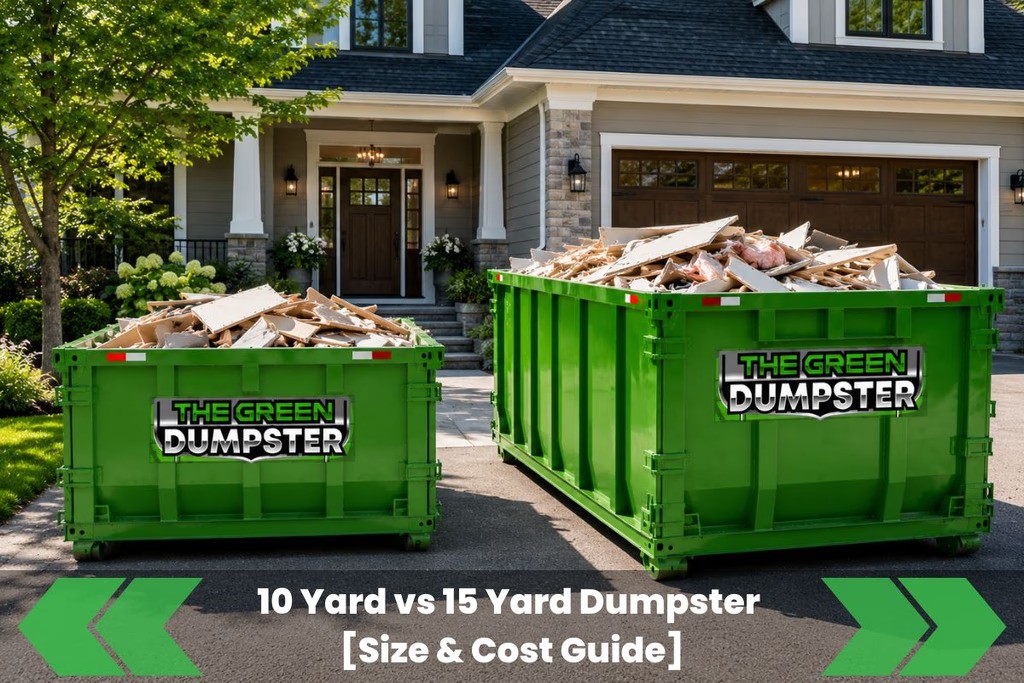
A 10 yard dumpster costs less and tucks into tight driveways. A 15 yard holds about 50% more and saves you from a second haul when the pile grows.
So which one wins your project?
That depends on what you're tossing, how much of it there is, and where the bin has to sit.
Here's the full 10 yard vs 15 yard dumpster breakdown: capacity, cost, and how to pick right.
Key Notes
A 10 yard dumpster runs around $520/week in LA & the 15 yard sits slightly higher.
Heavy debris like concrete favors the 10 yard to dodge weight overage fees.
Driveway length and truck access can override your size choice entirely.
Core Difference: 10 Yard vs 15 Yard Dumpster
The gap between a 10 yard and 15 yard dumpster comes down to roughly 50% more capacity and a little more breathing room before things feel cramped.

Both are small-to-mid-size containers, but the 15 buys you flexibility (and that flexibility is often what keeps a project from needing a second haul).
Decision Snapshot | 10 Yard | 15 Yard |
Rough dimensions | 12 ft × 8 ft × 3.5–4 ft | 16 ft × 8 ft × 4.5 ft |
Pickup loads | ~3 | ~4–5 |
Trash bags | 50–70 | 80–100 |
Footprint | Compact, fits tight driveways | Needs a bit more room |
Best for | Small, heavy, single-area jobs | Medium jobs, bulky mixed debris |
How Much Does A 10 Yard vs 15 Yard Dumpster Cost?
In Los Angeles, a 10 yard dumpster runs around $520 per week. A 15 yard sits a step above that – between the 10 yard and 25 yard price points – so you're looking at a modest bump for that extra 50% of capacity, not a huge jump.
Those weekly rates generally include delivery, pickup, and a set tonnage allowance baked into the price.
What Moves The Price Up Or Down?
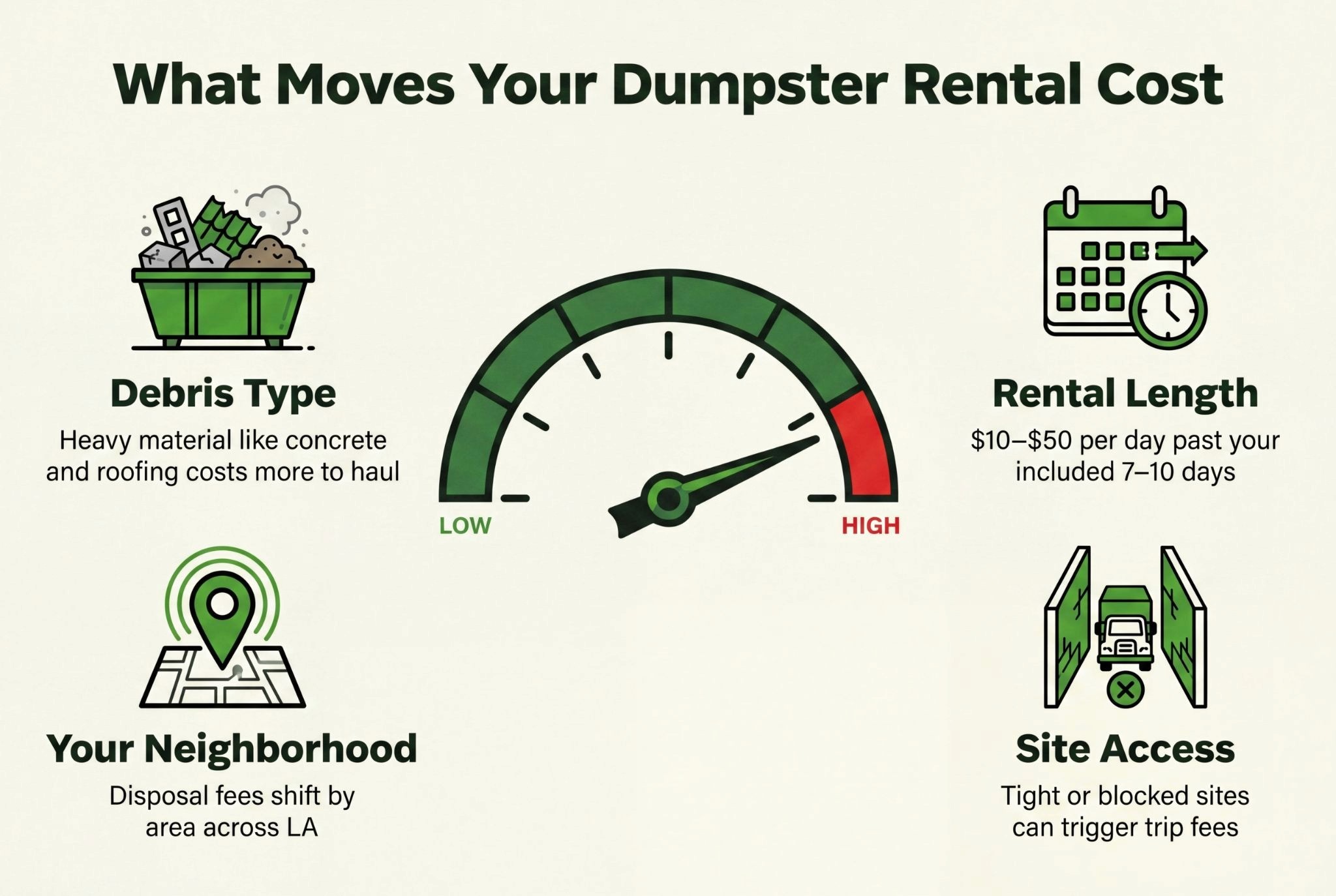
Fees To Watch On Both Sizes
A few charges apply whether you go with the 10 yard or the 15 yard, and knowing them upfront keeps the final bill from surprising you:
Weight overages: Often $50–$100+ per ton past your tonnage allowance.
Prohibited items: Things like tires or batteries can trigger penalties if they sneak into the bin.
Overfill fees: Anything sticking up over the rim is fair game for an extra charge.
None of that should be a mystery. A good provider hands you a written breakdown before you book, not after.
Which Dumpster Size Fits Your Project?
Choosing between a 10 yard vs 15 yard dumpster gets a lot easier when you stop thinking about volume alone and run it through three levers instead:
what your debris is made of
how big the job is,
where the bin has to sit
Debris Type: Heavy Material Pushes You Smaller
When your debris is heavy, the smarter move is usually the 10 yard (not the bigger bin).
A small dumpster maxes out on weight long before it fills up on space, and going bigger just tempts you to keep loading until you blow past the tonnage cap and rack up overage fees.
Go 10 yard for heavy debris. Concrete, brick, dirt, sand, tile, or shingles. The smaller bin keeps you honest on weight.
Go 15 yard for bulky-but-light debris. Drywall, cabinets, carpet, fixtures, furniture, and general renovation waste. It takes up room without weighing much, so you fill the space without ever sweating the scale.
Project Scope: One Area vs One Area Plus Extras
A simple gut check works well here, and it comes down to whether the job is contained to a single space or starting to spill past it:
One room or one area → 10 yard. A single-car garage cleanout, a small bathroom remodel, or a modest deck tear-out usually fits.
One room plus extras → 15 yard. A small kitchen remodel, a flooring replacement, or a fuller basement and garage purge crosses into 15 yard territory. The extra capacity stops the bin from filling up halfway through and leaving you stuck.
Site Constraints: Your Driveway Gets The Final Say
Here's where the heavy-debris and project-scope logic can get overruled.
A 15 yard is longer and needs a clear approach for the delivery truck, so the spot you've got can pull the decision back toward the smaller bin:
Short, narrow, or tight street access → lean 10 yard, even when the job itself leans bigger.
Measure before you book. Make sure there's room for the truck to drop and retrieve the bin without a headache.
Still Torn Between Two Sizes?
Tell us about your project and we'll match the right bin.
10 Yard vs 15 Yard Dumpster FAQs
Will a couch fit in a 10 yard dumpster?
A couch will fit in a 10 yard dumpster, with room to spare for other items. A standard three-seater takes up only a portion of the bin, so you can pair it with boxes, smaller furniture, or general cleanout debris in the same load.
How many cubic feet are in a 10 yard dumpster?
A 10 yard dumpster holds 270 cubic feet – that's 10 cubic yards multiplied by 27. For a rough mental picture, it's about three pickup truck loads or 50–70 filled trash bags.
What can't go in a 10 yard or 15 yard dumpster?
Hazardous and restricted materials can't go in either size – that means paints, solvents, oils, fuels, batteries, tires, asbestos, and electronics. LA has S.A.F.E. centers for hazardous waste, and most e-waste needs separate recycling, so check with your provider if you're unsure.
Is a 15 yard dumpster big enough for a kitchen remodel?
A 15 yard dumpster is big enough for most small-to-mid kitchen remodels, handling cabinets, countertops, flooring, and fixtures without hitting weight limits. If you're gutting a large kitchen down to the studs, you may want to size up to avoid a second haul.
Conclusion
The whole 10 yard vs 15 yard dumpster decision really comes down to a few answers.
If your debris is heavy – concrete, dirt, roofing – the 10 keeps you under the weight cap and away from overage fees. If it's bulky renovation waste, or you genuinely can't picture how big the pile will get, the 15's extra capacity earns its keep.
And whatever the job says, your driveway and access get a vote too. When you're stuck between the two, lean bigger – one extra haul costs more than the spare room ever will.
Tell us what you're clearing out and we'll point you to the right size with upfront pricing – so you book once, load at your pace, and skip the second-haul math entirely.